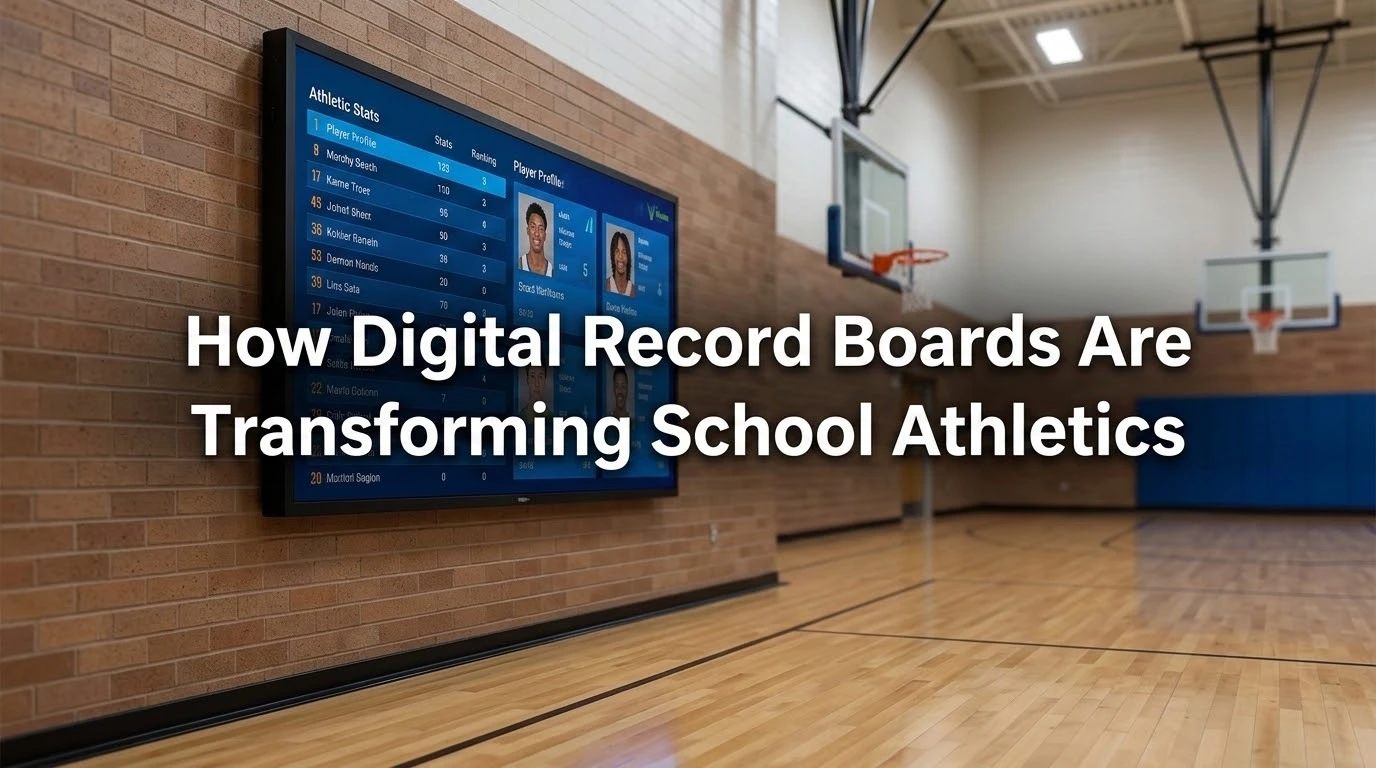
Walk into almost any high school gym lobby across the country and you will see the exact same thing. Dusty bronze plaques, acrylic boards with peeling vinyl lettering, and overflowing trophy cases that stopped making sense around 2012. Athletic directors and school administrators spend thousands of dollars trying to keep up with new swimming times, track records, and state championships. Eventually they run out of budget. Then they run out of wall space.
There is a growing shift away from static displays in educational facilities. Schools are realizing that a physical piece of metal screwed into a brick wall does not effectively tell the story of their athletic programs anymore. They need something dynamic to handle the sheer volume of student achievements. Decades of rich history should not be forgotten just because a hallway got too crowded.
Escaping the Physical Constraints of Hallways
The primary issue with traditional record keeping is real estate. A successful track and field program alone can generate dozens of record updates in a single spring season. Weightlifting leaderboards change weekly. When you rely on physical displays, someone has to measure the available wall space, order new engraved plates, wait weeks for fabrication, and get the maintenance staff to install them. The fonts rarely match the older plaques. Over time, the display looks like a patchwork project rather than a professional showcase.
When a school installs a digital record board, all of those physical constraints disappear. You are no longer measuring square footage in a crowded hallway or lobby. A cloud based database handles the storage, allowing an institution to preserve centuries of history without cluttering the physical environment. You can have five thousand athletes recognized in the exact same footprint that used to hold maybe fifty names.
Changing How Programs Recruit and Compete
Athletics is highly competitive long before the actual games begin. Whether it is a private school trying to attract scholar athletes or a public school wanting to retain top coaching talent, facilities matter. Families touring a campus notice how a school treats its history and its students.
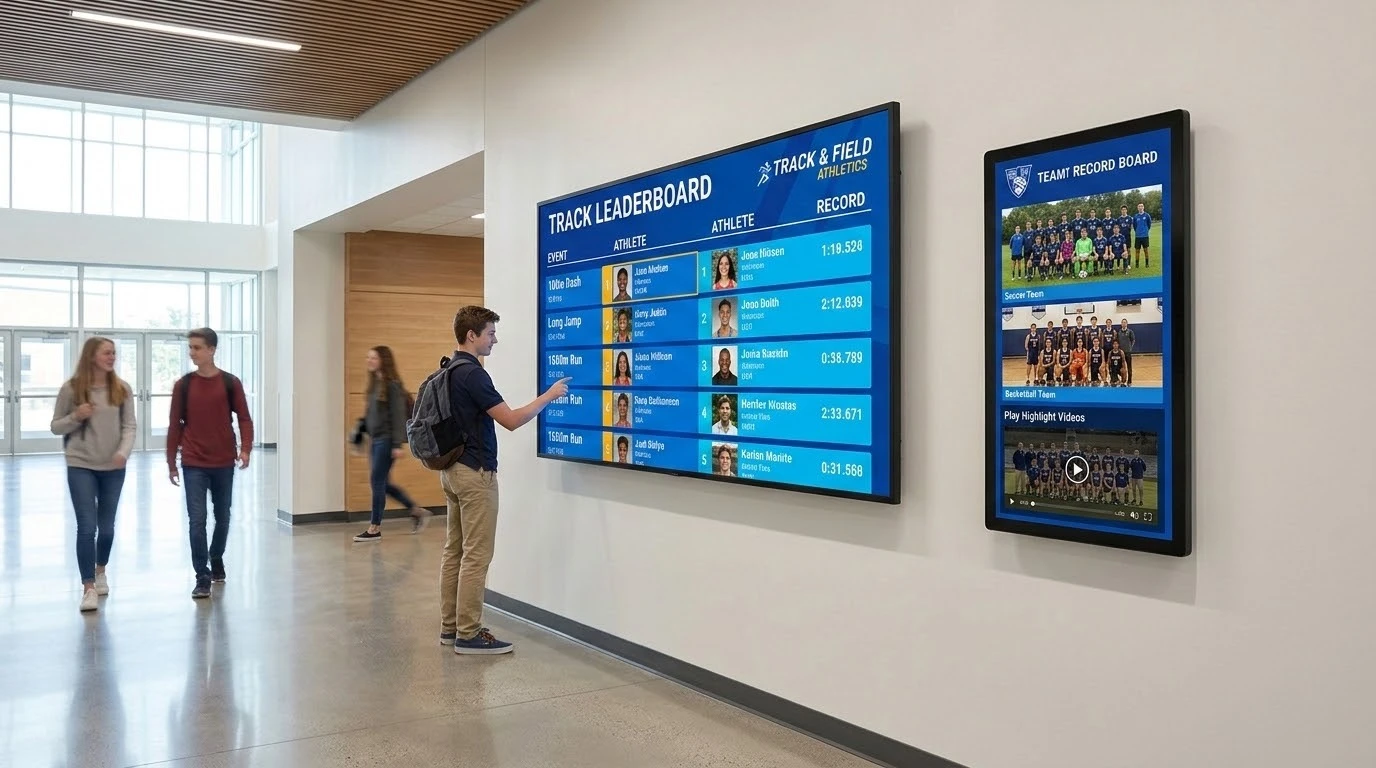
A static plaque sitting in a dark corner does not do much to impress a prospective student or their parents. They expect modern, interactive experiences. When you can pull up highlight videos, college commitments, and team championships with a few taps, it completely professionalizes your image. It shows recruits that if they succeed at your school, their achievements will be celebrated properly on a national stage. Upholding a state of the art reputation is essential for any program looking to build a winning culture.
The Reality of Daily Athletic Operations
Most athletic directors are severely short on time. They deal with bus schedules, referee cancellations, and parent complaints on a daily basis. The last thing they want to do is hunt down a local engraver to update the tennis roster from last month.
This operational burden is why the software side matters just as much as the visual hardware. A reliable touchscreen record board comes with an intuitive content management system built right in. You do not need to be an IT expert to use it. A coach or administrator can log in from their phone or office computer, update a track time, or add a new roster picture, and the display updates instantly. The days of waiting for expensive hardware updates or dealing with buggy software are over. The system is designed to evolve alongside the school.
Expanding Beyond Basic Records
Traditional displays are extremely limited in what they can show. A piece of wood only tells you a name and a year. Modern systems allow athletic departments to build a comprehensive digital school archive.
Instead of just listing the 1998 state championship team, users can tap into that year and view the full team roster, see the team captains, and watch highlight videos from the championship game. You can host coaches bios, post season schedules, share tryout information, and even provide virtual facilities tours. It turns a simple list of names into a living, interactive experience. This depth of information is impossible to replicate with physical media.
Managing the Migration of Historical Data
One of the biggest hesitations athletic directors have about upgrading is the fear of data entry. They look at fifty years of swimming times and assume it will take months to type everything into a new system.
In reality, the transition is straightforward. Modern database management systems are built to handle bulk uploads. If a school has its historical records in a basic spreadsheet, that data can be imported quickly. For the older physical records that only exist on the walls, student volunteers or administrative staff can easily input them through the content management system. Once the data is in the cloud, it is safe forever. You do not have to worry about a plaque falling off the wall and losing a piece of history.
Engaging Alumni and Creating Revenue Opportunities
Alumni are far more likely to stay connected to a program if they feel their contributions are remembered. Returning graduates love finding their old team photos or individual records. Giving them a way to access those memories easily makes them feel valued by the institution.
This level of community engagement directly translates to fundraising. Athletic departments are always looking for ways to pay for new uniforms, travel expenses, or training equipment. Modern interactive displays provide a natural way to recognize donors and promote sponsors effectively. You can dedicate specific sections of the display to capital campaigns, highlight named scholarships, or run local sponsor logos during heavily attended basketball games.
When you centralize announcements and give sponsors prime visibility in a high traffic area, the platform stops being just an expense. It becomes a dedicated tool that helps generate revenue. That delivers an ROI beyond measure for the athletic department.
Building an Archive That Lasts
Physical displays degrade over time. Photos fade under harsh fluorescent lighting. Metal tarnishes and acrylic scratches. By digitizing records, a school guarantees that its history remains accurate and visually appealing for generations to come.
You are essentially building a legacy that never graduates. From professional athletes and Olympians down to the junior varsity participants who laid the groundwork for future success, every piece of the program gets preserved. Schools invest heavily in their students and their facilities. Upgrading from static walls of fame to a dynamic digital legacy is simply the standard for modern education.