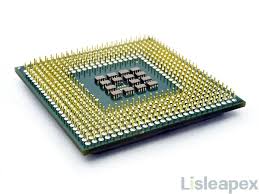
8085 microprocessor has:8-bit data bus and 16-bit address bus16-bit data bus and 8-bit address busBoth 8-bit data and address busBoth 16-bit data and address busA) 8-bit data bus and 16-bit address bus8085 is an 8-bit processor but can address 64KB memory using 16-bit address bus.
Program Counter in a microprocessor stores:DataAddress of current instructionAddress of next instructionOpcodeC) Address of next instructionProgram Counter keeps track of the memory address of the next instruction to be executed.
Which signal is used to differentiate memory and I/O operations in 8085?ALERDWRIO/MD) IO/MIO/M signal indicates whether operation is related to I/O or memory.
Stack grows in which direction in 8085?Upwards (higher memory address)Downwards (lower memory address)BothNoneB) Downwards (lower memory address)In 8085, stack grows towards lower memory addresses.
Which instruction is used to load accumulator directly from memory address in 8085?MOVMVILDASTAC) LDALDA loads accumulator directly from a specified memory address.
The ALU of a microprocessor performs:Data StorageArithmetic and Logical OperationsProgram Execution ControlI/O OperationsB) Arithmetic and Logical OperationsALU (Arithmetic Logic Unit) handles mathematical and logical computations.
Which is the smallest unit of memory in a microprocessor?ByteBitWordNibbleB) BitA bit is the smallest memory unit, representing 0 or 1.
Instruction pipelining in microprocessors improves:Instruction sizeMemory hierarchyInstruction throughputOpcode decodingC) Instruction throughputPipelining allows multiple instructions to be in different execution stages, increasing throughput.
The instruction "MOV AX, BX" does what?Adds AX and BXCopies BX into AXExchanges AX and BXMultiplies AX by BXB) Copies BX into AXMOV instruction copies data from source to destination without altering the source.
Which flag in the status register indicates an arithmetic overflow?Carry FlagZero FlagOverflow FlagSign FlagC) Overflow FlagOverflow flag is set when signed arithmetic result exceeds representable range.
Which bus carries the actual data in a microprocessor system?Which bus carries the actual data in a microprocessor system?Address BusData BusControl BusPower BusB) Data BusThe data bus is bidirectional and transfers data between CPU, memory, and peripherals.
The clock speed of a microprocessor determines:Size of RAMNumber of I/O devices supportedNumber of instructions executed per secondVoltage levelC) Number of instructions executed per secondHigher clock speed means more instructions can be processed per unit time.
Which type of memory is non-volatile?CacheRAMROMRegistersC) ROMRead-Only Memory retains data even when power is turned off.
The control signals like Read/Write are part of:Data BusAddress BusControl BusSystem ClockC) Control BusControl bus carries signals like Read, Write, and Interrupt to coordinate operations.
Which register stores the address of the next instruction?Instruction RegisterProgram CounterMARStack PointerB) Program CounterProgram Counter holds the memory address of the next instruction to be executed.
Which bus is unidirectional?Address BusData BusControl BusI/O BusA) Address BusAddress bus only sends addresses from CPU to memory/peripherals.
Instruction set of a processor is stored in:RAMROMCacheALUB) ROMInstruction set is fixed and stored in processor’s control memory (ROM).
The smallest unit of data in a microprocessor is:WordByteBitNibbleC) BitBit is the fundamental data unit, 0 or 1.
Which flag indicates result of arithmetic overflow?Zero FlagCarry FlagOverflow FlagSign FlagC) Overflow FlagOverflow flag is set when signed arithmetic result exceeds representable range.
Microcontroller differs from microprocessor because:It has no memoryIt has built-in memory and peripheralsIt executes slowerIt has no instruction setB) It has built-in memory and peripheralsMicrocontrollers integrate CPU, memory, and I/O devices on a single chip.
A view in SQL is:A virtual tableA physical copy of tableA backup tableA stored procedureA) A virtual tableViews represent query results as virtual tables without storing data.
Deadlock in DBMS happens when:Two transactions wait for each other’s resourcesToo many users query databaseA single query runs slowlyDatabase is corruptedA) Two transactions wait for each other’s resourcesCircular waiting leads to deadlock.
Which of the following ensures no partial or transitive dependency?1NF2NF3NFBCNFC) 3NF3NF removes both partial and transitive dependencies.
Commit operation in DBMS means:Rollback all changesSave changes permanentlySave changes temporarilyClose connectionB) Save changes permanentlyCOMMIT makes all changes permanent in database.
Indexing improves:Insert SpeedDelete SpeedQuery Retrieval SpeedDisk Space UsageC) Query Retrieval SpeedIndexes allow faster search and retrieval operations.
8085 is a:4-bit processor8-bit processor16-bit processor32-bit processorB) 8-bit processor8085 can process 8 bits of data at a time.
Which instruction is used to disable interrupts in 8085?SIMRIMDIEIC) DIDI (Disable Interrupts) turns off maskable interrupts.
The stack grows in which direction in memory?UpwardsDownwardsBothFixedB) DownwardsStack in 8085 grows downward (from higher to lower addresses).
The instruction “MOV A, B” copies data:From A to BFrom B to AFrom memory to AFrom A to memoryB) From B to AMOV A, B means load accumulator with contents of register B.
TRAP in 8085 is:Non-maskable interruptMaskable interruptSoftware interruptNone of theseA) Non-maskable interruptTRAP is the highest priority, non-maskable interrupt.
The brain of a microprocessor is:CacheALUControl unitRegistersB) ALUALU performs arithmetic and logic operations.
The 8086 microprocessor is:8-bit16-bit32-bit64-bitB) 16-bit8086 is a 16-bit microprocessor with 20-bit addressing.
The instruction MOV AX, BX belongs to:Data transfer groupControl groupLogical groupBranch groupA) Data transfer groupMOV copies data from one register to another.
Stack in a microprocessor grows towards:Lower memory addressesHigher memory addressesCPU registersCache memoryA) Lower memory addressesIn 8086, stack grows downward in memory.
The program counter stores:Address of current instructionAddress of next instructionAddress of last instructionData operandB) Address of next instructionPC always points to the next instruction to be executed.
Instruction cycle consists of:Fetch and Decode onlyFetch, Decode, ExecuteDecode and Execute onlyExecute onlyB) Fetch, Decode, ExecuteInstruction cycle has these three main steps.
Which register in 8086 holds the offset address?IPCSAXBPA) IPInstruction Pointer stores offset of next instruction.
Which flag indicates arithmetic overflow?ZFCFOFSFC) OFOverflow flag is set when arithmetic exceeds range.
Stack in microprocessors works on:FIFOFILOLIFORandomC) LIFOStack stores data on a Last-In-First-Out basis.
The clock speed of a microprocessor is measured in:BytesHertzInstructionsCycles onlyB) HertzClock speed is cycles per second.
In 8086, physical address = segment × 16 + ______.OffsetIPBaseCSA) OffsetOffset determines exact location within segment.
Microcontrollers are different from microprocessors because:They are slowerThey lack memoryThey include memory and I/O on-chipThey can’t handle interruptsC) They include memory and I/O on-chipMicrocontrollers are all-in-one embedded processors.
Which bus carries actual data?Address busControl busData busSystem busC) Data busData bus transfers information between CPU and memory.
Which flag indicates result is zero?ZFCFOFSFA) ZFZero flag is set when operation result = 0.
Instruction set of 8086 is:RISCCISCVLIWHarvardB) CISC8086 uses many complex instructions.
IP register in 8086 stores:Segment baseOffset of next instructionData addressStack pointerB) Offset of next instructionIP tracks next instruction address.
Highest priority interrupt in 8086:NMIINTRINT 3Software interruptA) NMINon-maskable interrupts have top priority.
Stack in 8086 grows:UpwardDownwardBothRandomlyB) DownwardStack pointer decreases as stack grows.
Which bus is unidirectional?Address busData busControl busSystem busA) Address busAddress bus only carries addresses from CPU.
The ALU performs:Only arithmeticOnly logicalBoth arithmetic and logical operationsOnly shiftingC) Both arithmetic and logical operationsALU is core for arithmetic and logic.
Intel 8086 is a:8-bit processor16-bit processor32-bit processor64-bit processorB) 16-bit processor8086 has a 16-bit data bus and registers.
The control unit of a processor:Stores dataExecutes instructionsDirects flow of instructionsPerforms arithmeticC) Directs flow of instructionsThe control unit coordinates processor operations.
In 8085, the size of address bus is:8-bit16-bit32-bit64-bitB) 16-bit8085 microprocessor can address 64 KB memory.
Interrupts in a microprocessor are:Software onlyHardware onlyBoth software and hardwareNoneC) Both software and hardwareInterrupts can be triggered by hardware or software.
The ALU performs:Arithmetic and logic operationsInput operationsOutput operationsMemory managementA) Arithmetic and logic operationsALU is responsible for calculations and logical decisions.
Which microprocessor introduced the x86 architecture?Intel 4004Intel 8086Intel 8086382Pentium ProB) Intel 80868086 introduced the x86 instruction set in 1978.
The instruction "MOV AX, BX" is an example of:Data transferArithmeticLogicalControl transferA) Data transferMOV copies data between registers.
Micro-operations are:Machine-level instructionsElementary operations on data in registersHigh-level instructionsMemory allocation methodsB) Elementary operations on data in registersMicro-operations are the smallest units of processing.
Which microprocessor uses pipelining for performance? Intel 8085 Intel 8086Pentium4004C) PentiumPentium processors introduced superscalar pipelining.
The flag register in microprocessors stores:OpcodesStatus of operationsMemory addressesInstruction countB) Status of operationsFlags record conditions like zero, carry, sign.
The control unit of a microprocessor:Performs arithmeticStores instructionsDirects data flowHandles I/OC) Directs data flowThe control unit coordinates instruction execution.
The size of the program counter in 8085 microprocessor is:8-bit12-bit16-bit32-bitC) 16-bit8085 uses a 16-bit PC to address 64 KB memory.
Which pin of 8086 is used for reset?INTRCLKRESETHOLDC) RESETRESET initializes the processor to a known state.
The instruction “MOV AX, BX” performs:Copy contents of AX into BXCopy contents of BX into AXExchange AX and BXMove AX to memoryB) Copy contents of BX into AXMOV copies source operand to destination.
Which signal differentiates memory access from I/O access in 8086?M/IOALERDWRA) M/IOM/IO distinguishes between memory and I/O operations.
The size of the program counter in the 8086 microprocessor is:8-bit16-bit32-bit64-bitB) 16-bitThe 8086 uses a 16-bit program counter to hold instruction addresses.
Which register in 8085 is used as a stack pointer?PCSPIRAccumulatorB)SPSP points to top of the stack.
Which signal differentiates memory and I/O operations?RDWRALE IO/MD) IO/MIO/M decides memory vs I/O access.
What is the function of Accumulator in microprocessor?Store instructionsStore intermediate resultsStore addressesControl signalsB) Store intermediate resultsAccumulator holds results of operations.
Instruction MOV A,B does what?Adds A and BMoves B into ASubtracts A from BCompares A and BB) Moves B into AMOV copies data from source to destination.