What celestial body is characterized by a long, luminous tail that typically points away from the Sun due to solar wind and radiation pressure?AsteroidPlanetComet MeteoroidC) Comet Comets are icy, small solar system bodies that, when passing close to the Sun, warm and begin to outgas, displaying a visible atmosphere or coma, and sometimes a tail. The tail is formed by the solar wind and radiation pressure pushing dust and gas away from the Sun.
What is the name of the cloud of icy objects located beyond Neptune's orbit, believed to be the source of many comets?Asteroid BeltOort Cloud Kuiper BeltVan Allen Belt C) Kuiper Belt The Kuiper Belt is a doughnut-shaped region of icy bodies extending beyond Neptune's orbit. It is home to thousands of small, icy bodies and is considered the source of many short-period comets.
What causes the phenomenon of "retrograde motion" observed in planets like Mars when viewed from Earth?The planet temporarily reverses its orbit.The Earth's orbital speed is faster than the outer planet's, causing an optical illusion.The planet is moving away from the Sun. A gravitational anomaly.B) The Earth's orbital speed is faster than the outer planet's, causing an optical illusion.Retrograde motion is an apparent change in the direction of the planet's movement through the night sky. It is not real backward motion but an optical illusion caused by the faster orbital speed of Earth "lapping" the slower outer planets.
What is a "pulsar"? A type of variable star that expands and contracts.A rapidly rotating neutron star that emits beams of electromagnetic radiation.A region in space where new stars are forming. A type of galaxy with a very active core.B) A rapidly rotating neutron star that emits beams of electromagnetic radiation.Pulsars are highly magnetized, rapidly rotating neutron stars that emit beams of electromagnetic radiation out of their magnetic poles. These beams are detected as pulses if they sweep past Earth, similar to a lighthouse beam.
Which instrument is primarily used by astronomers to break down light from celestial objects into its component colors, revealing information about their composition and motion?TelescopeSpectroscopePhotometer AstrolabeB) SpectroscopeA spectroscope is an instrument used to observe a spectrum of light. In astronomy, it allows scientists to analyze the unique "fingerprints" of elements in a star's or galaxy's light, revealing its chemical composition, temperature, and velocity.
What is the approximate age of the universe, according to current cosmological models? A: 4.5 billion years10 billion years4.5 billion years13.8 billion years20 billion yearsC) 13.8 billion yearsBased on extensive observational data, including the cosmic microwave background radiation and the expansion rate of the universe, the current accepted age of the universe is approximately 13.8 billion years.
What is the term for a relatively small, rocky or metallic body that orbits the Sun, primarily found in the region between Mars and Jupiter? CometMeteoroidAsteroid Dwarf Planet C) AsteroidAsteroids are small, rocky objects that orbit the Sun. While they can be found throughout the solar system, most are located in the main asteroid belt, a region between the orbits of Mars and Jupiter.
Which force is responsible for holding stars and galaxies together?Electromagnetic forceStrong nuclear forceWeak nuclear forceGravitational forceD) Gravitational forceGravity is the fundamental force responsible for the formation and structure of astronomical objects. It attracts masses together, holding stars, planets, and entire galaxies in their configurations.
What is the name of the theory that describes the origin and evolution of the universe from a hot, dense state?Steady State TheoryBig Bang TheoryOscillating Universe TheoryFlat Earth Theory B) Big Bang TheoryThe Big Bang Theory is the leading cosmological model for the observable universe from the earliest known periods through its subsequent large-scale evolution. It posits that the universe began from a very hot, dense state and has been expanding and cooling ever since.
What is a "light-year"?A unit of time equal to one year on Earth.A measure of the brightness of a star.A unit of distance representing the distance light travels in one Earth year.The time it takes for light to travel from the Sun to Earth. C) A unit of distance representing the distance light travels in one Earth year. A light-year is a unit of length used to express astronomical distances and is equivalent to the distance that light travels in one Julian year (365.25 days) in vacuum.
Which planet in our solar system is known for its prominent system of rings, composed mainly of ice particles and rocky debris?JupiterUranusNeptuneSaturnD) SaturnSaturn is famous for its extensive and complex system of rings, which are its most striking feature. These rings are made up of billions of small particles ranging in size from micrometers to meters, largely composed of water ice with a smaller amount of rocky material.
What is the term for a region of spacetime where gravity is so strong that nothing, not even light, can escape?NebulaQuasar Black Hole Neutron StarC) Black HoleA black hole is a region of spacetime where gravity is so strong that nothing—no particles or even electromagnetic radiation such as light—can escape from it.
Which planet in our solar system is known as the "Red Planet" due to the iron oxide prevalent on its surface? VenusJupiterMarsMercuryC) MarsMars is often called the "Red Planet" because of the iron minerals in its soil, which oxidize (rust) and turn the surface and atmosphere a rusty red.
What is the celestial phenomenon that occurs when the Moon passes directly between the Sun and Earth, casting a shadow on Earth? Lunar Eclipse Solar EclipseTransitOccultationB) Solar Eclipse A solar eclipse occurs when the Moon passes between the Sun and Earth, thereby obscuring the image of the Sun for a viewer on Earth.
What is the approximate length of time it takes for light from the Sun to reach Earth?8 seconds8 minutes8 hours8 daysB) 8 minutesLight travels at approximately 300,000 kilometers per second. Given the average distance between the Sun and Earth (about 150 million kilometers), it takes roughly 8 minutes and 20 seconds for sunlight to reach our planet.
Which of the following is considered the "birthplace" of stars?Supernovae remnants Planetary nebulaeStellar nurseries (molecular clouds)White dwarf regionsC) Stellar nurseries (molecular clouds) Stars are born within vast, dense clouds of gas and dust called molecular clouds, often referred to as stellar nurseries. Gravity causes parts of these clouds to collapse, forming protostars that eventually ignite into full-fledged stars.
What is a "supernova"? A very small star.The explosion of a star.A type of galaxy.A type of asteroid. B) The explosion of a star.A supernova is a powerful and luminous stellar explosion. This transient astronomical event occurs during the last evolutionary stages of a massive star or when a white dwarf is triggered into runaway nuclear fusion.
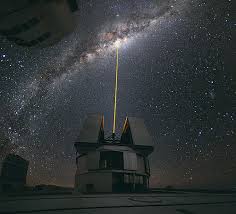
The name of the galaxy that contains our solar system is:AndromedaTriangulumThe Milky WayPinwheelC) The Milky WayThe Milky Way is the galaxy that contains our solar system. The name is derived from its appearance as a dim, glowing band in the night sky.
What is "astrology"?The scientific study of celestial objects, space, and the physical universe. A pseudoscience that claims to explain and predict human events based on the position of celestial objects.The study of the Earth's atmosphere.The study of the moon's phases.B) A pseudoscience that claims to explain and predict human events based on the position of celestial objects.Astrology is a pseudoscience, in contrast to astronomy, which is the scientific study of the universe.
The term "cosmology" refers to the scientific study of:The moon.The origin, evolution, and fate of the universe.The sun.Black holes.B) The origin, evolution, and fate of the universe. Cosmology is the branch of astronomy that involves the origin and evolution of the universe, from the Big Bang to today and on into the future.
The "Andromeda Galaxy" is the nearest major galaxy to the Milky Way. What is its distance from us?2.5 million light-years250,000 light-years25 million light-years250 million light-yearsA) 2.5 million light-yearsThe Andromeda Galaxy is the closest large galaxy to our own, the Milky Way, at a distance of about 2.5 million light-years.
What is the "Hubble's Law"?The law that describes the motion of a planet around the sun. The law that describes the expansion of the universe.The law that describes the formation of stars.The law that describes the formation of galaxies.B) The law that describes the expansion of the universe.Hubble's law, also known as the Hubble-Lemaître law, is the observation in physical cosmology that galaxies are moving away from the Earth at speeds proportional to their distance.
The "Event Horizon" is the boundary of which celestial object? A starA black hole A planet A galaxy B) A black holeThe event horizon is a boundary in spacetime beyond which events cannot affect an outside observer. It is defined as the point of no return for a black hole.
What is the term for a "star that has exhausted its nuclear fuel" and collapsed under its own gravity?A nebulaA cometA white dwarf, neutron star, or black hole A planetC) A white dwarf, neutron star, or black holeA star that has exhausted its nuclear fuel undergoes a gravitational collapse, and its final state depends on its mass.
The "Kepler-186f" is a planet that is notable for being:The largest planet in the universe. The first Earth-sized planet found in the habitable zone of another star.The first planet discovered outside of our solar system.The hottest planet in the universe. B) The first Earth-sized planet found in the habitable zone of another star.Kepler-186f is the first validated Earth-sized planet to orbit a star in the habitable zone, the range of distance where liquid water might exist on a planet's surface.
What is a "galaxy"? A single star.A massive system of stars, stellar remnants, interstellar gas, dust, and dark matter, all bound together by gravity.A single planet.A single moon.B) A massive system of stars, stellar remnants, interstellar gas, dust, and dark matter, all bound together by gravity. A galaxy is a massive, gravitationally bound system.
The "Big Bang Theory" is a cosmological model that describes the:Formation of black holes. Origin of the universe. Formation of galaxies.Formation of stars.B) Origin of the universe.The Big Bang Theory is the prevailing cosmological model for the observable universe from the earliest known periods through its subsequent large-scale evolution.
The "Oort Cloud" is believed to be a source of: AsteroidsCometsPlanetsMoonsB) CometsThe Oort Cloud is a theoretical cloud of icy planetesimals believed to be the source of most long-period comets.
What is a "quasar"? A type of star. A very bright object believed to be the active core of a distant galaxy.A type of asteroid.A type of moon. B) A very bright object believed to be the active core of a distant galaxy.Quasars are some of the most distant and luminous objects in the universe. They are thought to be powered by supermassive black holes.
The first human to walk on the Moon was:Yuri GagarinNeil Armstrong Buzz Aldrin Alan Shepard B) Neil ArmstrongNeil Armstrong was an American astronaut and aeronautical engineer, and the first person to walk on the Moon in 1969.
What is a "quasar"?A type of star.A massive and extremely luminous celestial object, believed to be powered by a supermassive black hole.A type of asteroid.A type of galaxy. B) A massive and extremely luminous celestial object, believed to be powered by a supermassive black hole.A quasar is an extremely bright and distant active galactic nucleus.
The "Andromeda Galaxy" is the nearest major galaxy to the Milky Way. What is its distance from us?2.5 million light-years250,000 million light-years25 million light-years250 million light-years A) 2.5 million light-yearsThe Andromeda Galaxy is the closest large galaxy to our own, the Milky Way, at a distance of about 2.5 million light-years.
The "Event Horizon" is the boundary of which celestial object?A starA black holeA planetA galaxy B) A black holeThe event horizon is a boundary in spacetime beyond which events cannot affect an outside observer. It is defined as the point of no return for a black hole.
What is the term for a "star that has exhausted its nuclear fuel" and collapsed under its own gravity?A nebula A cometA white dwarf, neutron star, or black holeA planetC) A white dwarf, neutron star, or black holeA star that has exhausted its nuclear fuel undergoes a gravitational collapse, and its final state depends on its mass.
The "Kepler-186f" is a planet that is notable for being: The largest planet in the universe.The first Earth-sized planet found in the habitable zone of another star.The first planet discovered outside of our solar system.The hottest planet in the universe. B) The first Earth-sized planet found in the habitable zone of another star.Kepler-186f is the first validated Earth-sized planet to orbit a star in the habitable zone, the range of distance where liquid water might exist on a planet's surface.
The Milky Way is a:Spiral galaxy.Elliptical galaxy.Irregular galaxy. Lenticular galaxy.A) Spiral galaxy.The Milky Way is a barred spiral galaxy, a type of spiral galaxy with a bar-shaped structure of stars at its center.
The "Event Horizon" is the boundary of which celestial object? A starA black holeA planet A galaxy B) A black holeThe event horizon is a boundary in spacetime beyond which events cannot affect an outside observer. It is defined as the point of no return for a black hole.
The term "redshift" refers to: The shift of light towards the blue end of the spectrum.The shift of light towards the red end of the spectrum.The shift of light towards the green end of the spectrum.The shift of light towards the yellow end of the spectrum.B) The shift of light towards the red end of the spectrum.Redshift is a phenomenon in which light from distant galaxies appears to be shifted towards the red end of the spectrum, indicating that the galaxies are moving away from us.
: What is the name of the first rover to land on Mars?Perseverance CuriositySojourner Spirit C) SojournerSojourner was the first rover to land on Mars in 1997 as part of the Mars Pathfinder mission.
The term "supernova" refers to:The formation of a star.The explosion of a star.The death of a star.The birth of a star.B) The explosion of a star. A supernova is a powerful and luminous stellar explosion. It is the largest explosion that takes place in space.
What is a "nebula"? A type of star.A giant cloud of gas and dust in space where stars are born.A type of asteroid. A type of galaxy. B) A giant cloud of gas and dust in space where stars are born.A nebula is an interstellar cloud of dust, hydrogen, helium, and other ionized gases.
The term "light-year" refers to a measure of:TimeDistanceSpeedMassB) DistanceA light-year is a unit of astronomical distance equivalent to the distance that light travels in one year.
: What is the name of the first human to travel into space?Neil Armstrong Buzz AldrinYuri Gagarin Alan ShepardC) Yuri GagarinYuri Gagarin was a Soviet pilot and cosmonaut who became the first human to journey into outer space in 1961.
The planet "Mars" is also known as the: Red Planet Blue PlanetGreen PlanetYellow Planet A) Red Planet Mars is called the Red Planet because of its reddish appearance, which is caused by iron oxide (rust) on its surface.
The Hubble Space Telescope orbits the Earth and is primarily used for: Studying the sun. Observing distant galaxies and nebulae.Communicating with astronauts on the International Space Station.Monitoring the Earth's weather.B) Observing distant galaxies and nebulae.The Hubble Space Telescope is a space-based observatory that has provided stunning images of distant galaxies and nebulae, greatly advancing our understanding of the universe.
What is the name of the galaxy that contains our solar system?Andromeda GalaxyTriangulum Galaxy Milky Way GalaxyWhirlpool GalaxyC) Milky Way GalaxyOur solar system is located in the Milky Way Galaxy, a spiral galaxy that is home to billions of stars.
The term "asteroid" refers to a small rocky body that orbits the Sun. Where are most asteroids found in our solar system?Between Earth and Mars. Between Mars and Jupiter. Beyond Neptune.In the Oort Cloud. B) Between Mars and Jupiter.The majority of asteroids in our solar system are found in the asteroid belt, a torus-shaped region located between the orbits of Mars and Jupiter.
What is the name of the theory that explains the origin and evolution of the universe from a single point?The Steady-State Theory.The Big Bang Theory.The Pulsating Universe Theory.The Inflationary Theory.B) The Big Bang Theory.The Big Bang theory is the prevailing cosmological model for the universe, stating that the universe began as a hot, dense singularity and has been expanding ever since.
Which planet is the closest to the Sun? EarthVenusMercuryMarsC) MercuryMercury is the innermost and smallest planet in the Solar System, orbiting the Sun in just 88 Earth days.
The planet Saturn is best known for its:Red color.Great Red Spot.Prominent ring system.Being the smallest planet.C) Prominent ring system. Saturn is the sixth planet from the Sun and is a gas giant known for its spectacular and complex system of rings.
The planet Venus is known for being:The coldest planet.The largest planet.The hottest planet due to a runaway greenhouse effect.The only planet with life.C) The hottest planet due to a runaway greenhouse effect.Venus has a dense atmosphere of carbon dioxide and a surface temperature of over 460 degrees Celsius, making it the hottest planet in the Solar System.
A "light-year" is a measure of: TimeMass Distance VelocityC) DistanceA light-year is the distance that light travels in a vacuum in one Julian year.
Which of the following is the planet closest to the Sun? Mars EarthMercuryVenusC) MercuryMercury is the first planet from the Sun and the smallest planet in the Solar System.
The "Kuiper Belt" is a region of the solar system located beyond the orbit of which planet?Jupiter Saturn NeptuneUranus C) Neptune The Kuiper Belt is a doughnut-shaped ring of icy objects beyond Neptune's orbit.