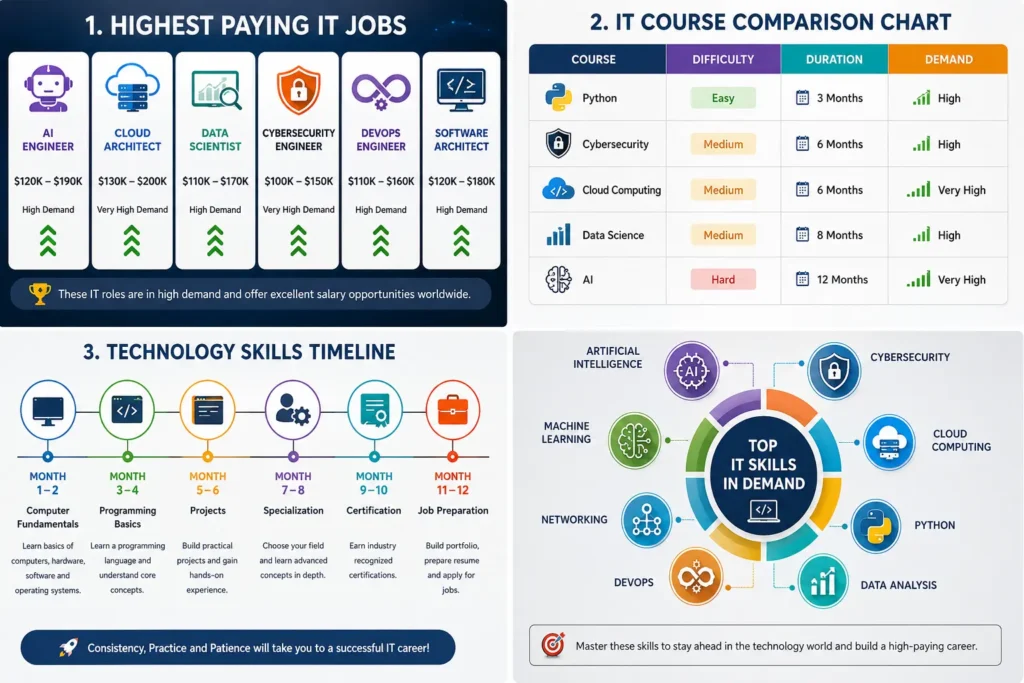
IT courses has become the foundation of modern business, education, healthcare, banking, and communication. As organizations continue to adopt digital solutions, the demand for skilled IT professionals keeps growing worldwide.
Today, IT courses are among the most valuable educational investments because they provide practical skills, career opportunities, and high earning potential. Whether someone wants to become a software developer, cybersecurity analyst, cloud engineer, or data scientist, there is an IT course designed for that goal.
The growth of online IT courses has made technology education accessible to students, professionals, and career changers regardless of location. Many learners can now gain industry-recognized skills from home.
This guide explains the most important IT courses available in 2026, their benefits, career opportunities, salaries, and how to choose the right learning path.
Why IT Courses Matter Today
The global economy increasingly depends on technology. Businesses require professionals who can:
- Develop software
- Manage networks
- Secure systems
- Analyze data
- Build cloud infrastructure
- Create websites
- Manage databases
Organizations across every industry hire IT professionals because digital transformation continues to expand.
Benefits of IT courses include:
- Better job opportunities
- Higher salaries
- Remote work options
- Global employment opportunities
- Career flexibility
- Continuous learning opportunities
What Are IT Courses?
IT courses are educational programs that teach information technology skills. These programs may focus on:
- Programming
- Networking
- Cybersecurity
- Cloud computing
- Data analysis
- Artificial intelligence
- Web development
- Database management
Some courses are designed for beginners, while others target experienced professionals.
Types of IT Courses
Programming Courses
Programming forms the foundation of modern technology.
Popular programming languages include:
- Python
- Java
- JavaScript
- C++
- C#
- PHP
Programming courses teach:
- Variables
- Functions
- Algorithms
- Data structures
- Object-oriented programming
Career opportunities:
- Software Developer
- Web Developer
- Application Developer
Cybersecurity Courses
Cybersecurity professionals protect organizations from digital threats.
Topics include:
- Ethical hacking
- Network security
- Security operations
- Risk management
- Penetration testing
Popular certifications:
- CompTIA Security+
- Certified Ethical Hacker
- CISSP
Careers:
- Security Analyst
- Security Engineer
- Ethical Hacker
Cloud Computing Courses
Cloud technology powers modern businesses.
Major cloud platforms:
- AWS
- Microsoft Azure
- Google Cloud
Skills learned:
- Cloud architecture
- Virtual machines
- Cloud security
- Storage systems
- Deployment services
Career paths:
- Cloud Engineer
- Solutions Architect
- DevOps Engineer
Data Science Courses
It has become one of the world’s most valuable resources.
Data science courses teach:
- Data analysis
- Statistics
- Python
- Machine learning
- Data visualization
Careers:
- Data Analyst
- Data Scientist
- Business Analyst
Artificial Intelligence Courses
AI continues to reshape industries.
Topics include:
- Machine learning
- Neural networks
- Natural language processing
- Deep learning
Career opportunities:
- AI Engineer
- Machine Learning Engineer
- Research Scientist
Best Online IT Courses for Beginners
1. Python Programming
Python remains one of the easiest and most powerful programming languages.
Advantages:
- Easy syntax
- High demand
- Multiple applications
Uses:
- Web development
- AI
- Automation
- Data science
2. Web Development
Web development includes:
- HTML
- CSS
- JavaScript
Advanced frameworks:
- React
- Angular
- Node.js
3. Computer Networking
Networking courses teach:
- Routers
- Switches
- TCP/IP
- Network security
Popular certifications:
- Cisco CCNA
- Network+
4. Database Management
Topics:
- SQL
- Database design
- Data modeling
Careers:
- Database Administrator
- Data Engineer
Online IT Courses vs Traditional Learning
| Feature | Online IT Courses | Traditional Classes |
|---|---|---|
| Flexibility | High | Limited |
| Cost | Lower | Higher |
| Accessibility | Global | Local |
| Self-Paced | Yes | No |
| Recorded Lessons | Yes | Limited |
| Certification | Available | Available |
Online learning provides greater flexibility for modern learners.
How to Choose the Right IT Course
Consider:
- Career goals.
- Current skill level.
- Budget.
- Learning style.
- Industry demand.
- Certification value.
Beginners should start with foundational courses before moving to advanced specializations.
Skills Gained from IT Courses
Students develop:
- Problem solving
- Analytical thinking
- Technical expertise
- Communication skills
- Project management
- Team collaboration
These skills remain valuable across industries.
Salary Potential After IT Courses
| Job Role | Average Annual Salary |
|---|---|
| Software Developer | High |
| Data Scientist | High |
| Cloud Engineer | High |
| Security Analyst | High |
| Web Developer | Moderate to High |
| Network Engineer | Moderate to High |
Technology careers continue to offer strong earning potential globally.
Common Mistakes Students Make
- Choosing courses only because of trends.
- Ignoring practical projects.
- Avoiding certifications.
- Learning too many technologies simultaneously.
- Not building a portfolio.
Consistent practice produces better results than watching videos alone.
Expert Tips
- Build real projects.
- Practice daily.
- Join technology communities.
- Earn certifications.
- Create a portfolio website.
- Continue learning new technologies.
Technology changes rapidly, making continuous learning essential.
Top IT Certifications That Employers Value
Certifications validate technical skills and demonstrate professional competence. While practical experience remains important, industry certifications often help candidates stand out in competitive job markets.
Google IT Support Certificate
This certification helps beginners understand:
- Computer systems
- Networking
- Operating systems
- Troubleshooting
- Technical support
It is suitable for individuals entering the technology industry for the first time.
AWS Certified Solutions Architect
Cloud computing continues to dominate enterprise technology.
This certification covers:
- Cloud architecture
- Storage services
- Networking
- Security
- Infrastructure design
Cloud professionals remain among the highest-paid IT specialists.
Microsoft Azure Certifications
Organizations worldwide use cloud services to run applications and store data.
Popular certifications include:
- Azure Fundamentals
- Azure Administrator
- Azure Solutions Architect
These certifications provide opportunities in enterprise cloud environments.
Cisco CCNA
Networking remains one of the core areas of information technology.
The CCNA certification teaches:
- Routing
- Switching
- IP addressing
- Network security
- Troubleshooting
Network engineers continue to be essential for organizations.
CompTIA Certifications
CompTIA offers several beginner-friendly certifications:
- A+
- Network+
- Security+
These certifications help students establish foundational knowledge.
Career Paths After Completing IT Courses
Many students ask which career path offers the best opportunities. The answer depends on interests, strengths, and goals.
Software Development
Responsibilities:
- Building applications
- Writing code
- Testing software
- Fixing bugs
Skills required:
- Programming
- Databases
- Frameworks
Cybersecurity
Responsibilities:
- Protecting systems
- Monitoring threats
- Managing security tools
Skills required:
- Security analysis
- Risk management
- Ethical hacking
Data Science
Responsibilities:
- Data analysis
- Reporting
- Machine learning
Skills required:
- Statistics
- Python
- Data visualization
Cloud Computing
Responsibilities:
- Cloud deployment
- Infrastructure management
- Automation
Skills required:
- AWS
- Azure
- Linux
- Networking
Web Development
Responsibilities:
- Website development
- User interfaces
- Backend systems
Skills required:
- HTML
- CSS
- JavaScript
Best IT Courses for Different Career Goals
| Career Goal | Recommended Course |
|---|---|
| Software Developer | Python, Java |
| Web Developer | HTML, CSS, JavaScript |
| Data Analyst | Data Science |
| Security Analyst | Cybersecurity |
| Cloud Engineer | AWS, Azure |
| Network Engineer | CCNA |
| AI Engineer | Machine Learning |
| Database Administrator | SQL |
Are Online IT Courses Worth It?
Many employers now recognize online certifications and practical skills.
Advantages include:
- Flexible schedules
- Lower costs
- Self-paced learning
- Global access
- Updated content
The value of online IT courses often depends on:
- Course quality
- Hands-on projects
- Certification recognition
- Portfolio development
Best Learning Platforms for IT Courses
Coursera
Offers university-level courses and professional certificates.
Udemy
Provides affordable practical courses for beginners and professionals.
edX
Features courses from leading universities.
LinkedIn Learning
Focuses on professional development.
Google Career Certificates
Provides beginner-friendly technology programs.
Microsoft Learn
Offers free learning resources and certification preparation.
How Long Does It Take to Learn IT?
The learning timeline varies.
| Skill Area | Estimated Time |
|---|---|
| HTML & CSS | 1–2 months |
| Python | 3–6 months |
| Networking | 3–6 months |
| Cybersecurity | 6–12 months |
| Cloud Computing | 6–12 months |
| Data Science | 8–12 months |
| Artificial Intelligence | 12+ months |
Consistent practice significantly improves learning speed.
Practical Projects for IT Students
Projects help students gain experience.
Examples include:
- Personal websites
- Portfolio websites
- Calculator applications
- Chat applications
- Data dashboards
- Security labs
- Cloud deployments
Employers often value projects more than certificates.
How to Build an IT Portfolio
A strong portfolio should include:
- Personal projects
- GitHub repositories
- Certifications
- Technical articles
- Case studies
Students can also create tutorials and share knowledge online.
Advantages of IT Courses
Pros
- High demand.
- Global opportunities.
- Remote work options.
- Strong salary potential.
- Career flexibility.
- Continuous growth.
Cons
- Continuous learning required.
- Technology changes rapidly.
- Some certifications can be expensive.
- Competitive job market in certain areas.
Common Challenges in Learning IT
Students often face:
- Information overload.
- Lack of practical experience.
- Inconsistent practice.
- Fear of coding.
- Choosing too many courses.
A focused learning roadmap helps overcome these challenges.
Frequently Asked Questions
Which IT course is best for beginners?
Python programming, web development, and IT support courses are excellent starting points.
Are online IT courses accepted by employers?
Many employers accept reputable certifications and practical experience.
Which IT field pays the highest salary?
Cloud computing, artificial intelligence, cybersecurity, and data science often provide high earning potential.
Can I learn IT without a degree?
Yes. Many successful IT professionals build careers through certifications, projects, and practical experience.
How many months does it take to complete IT courses?
Basic skills may require a few months, while advanced specializations may take one year or more.
Final Thoughts
IT courses continue to open doors to some of the most rewarding careers in the modern world. Whether someone wants to become a software developer, cybersecurity analyst, cloud engineer, or data scientist, there is an educational path available.
The growth of online IT courses has made technology education more accessible than ever before. With dedication, practical projects, and continuous learning, students can develop valuable skills that remain relevant for years.
Technology continues to evolve, and individuals who invest in IT education today position themselves for future opportunities. Choosing the right IT courses can become the first step toward a successful and sustainable technology career.